
Manchester United 'smarter' transfer strategy has been made clear this week

Man Utd don’t want to hoard players and are aiming to become smarter with their transfer strategy.
A few eyebrows were raised when Manchester United agreed two player sales earlier this week.
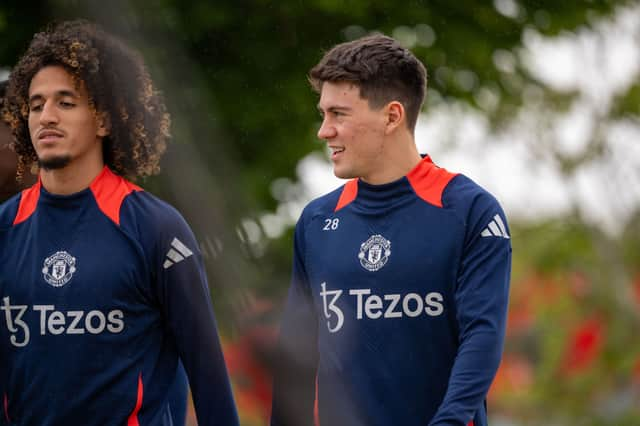

Facundo Pellistri was sold to Panathinikos while Maxi Oyedele is poised to join Legia Warsaw on a permanent deal as well. United will only receive a €6m fixed fee with another €2m in performance-related bonuses for the sale of Pellistri, while Oyedele will also leave for a low initial fee.
It might not be perfect practice just yet, but United believe it is another step forward in their pursuit of a 'smarter' transfer strategy when it comes to academy graduates in particular.
United won't shy away from the fact their academy was set-up as a cost-cutting measure as they looked to nurture their own talent, rather than spending huge sums on transfer fees. Yet in the modern world, an academy system can also be a huge money maker as well.
Amid the real threat of FFP and PSR sanctions, there have been a number of notable academy sales across the Premier League, with United also well aware of the money which can be made by selling on their own untapped potential. A key reason for this is the counterintuitive current rules which mean any academy player sale counts as pure profit on the balance sheets. It in theory means, a team is better off selling a homegrown player ahead of anyone else in their first-team squad.
United have aimed to become "smarter" in terms of selling academy graduates and they have also become a lot more ruthless, with staff suspecting players are going "stale and sour" if they stay at the club too long without getting an opportunity to play. They could make even more money off their academy if they really wanted to, but they are keen to strike the appropriate balance between nurturing young talent and the harsh business side of football that sees every individual as a market asset.
When it comes to transfer fees, United still look to get a fair price for their players where possible, but are also happy for the real value of a deal to be made up with future sell-on fees or buyback clauses. In the case of Pellistri, United will have a buy-back option for 3 years and be due 45% of any sell-on fee. Though the initial fees might look a little underwhelming at times, it only takes one hefty transfer fee to be paid for United to land a significant windfall.
United are also using the current academy climate to their advantage when it comes to new recruits. While there has always been a clamour for homegrown talent, the demand has skyrocketed in recent years following the introduction of Brexit regulations that make it impossible to sign players aged under 18 from Europe. Another contributing factor are the strict financial fair play restraints which have led to an emphasis on identifying elite talent as early as possible in order to save money.
They have won the race to sign Chido Obi-Martin from Arsenal, who will officially join the club once Premier League ratification is given to the deal, with one source suggesting it usually takes six weeks for transfers between two Category One clubs to be processed. He will join former Ipswich Town striker Silva Mexes, who is the son of Wales great Robert Earnshaw, Australian full-back James Overy, Reading forward Camron Mpofu and Aston Villa defender Dante Plunkett in joining the club this summer.
If just one of those deals is a success, United's clever transfer approach will only look smarter.