
The stark warning Manchester's skyline will become 'harmfully boring' - and what can be done about it

We deserve better. With every new apartment block, tower and office space, our cities are at risk of becoming “harmfully boring.”
That’s the central idea behind the Humanise movement, spearheaded by Thomas Heatherwick, the designer behind pioneering projects such as the 2012 Olympic Cauldron and the Little Island park on New York’s Hudson river. In Manchester, he is probably best known for the long-gone B of Bang installation that once stood outside the Etihad Stadium.
In his book of the same name, Heatherwick sets out his manifesto using examples of architecture from all over the world and thought-provoking research into the effect boringness has on our mental health, wellbeing and environment.
Manchester is a fitting case study for this. Each year we see more and more high-rises emerging from brownfield sites, and while the skyline looks impressive from afar, how much thought is being put into their impact at street-level? With Humanise, Heatherwick is urging us to question – how do they make us feel?
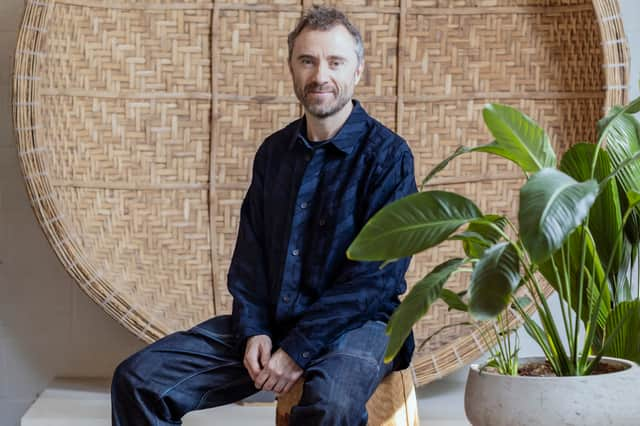

What is the Humanise movement?
“We all know that the buildings in our towns and cities are getting worse,” Heatherwick told ManchesterWorld. “They're not good, in general. A tiny percentage of them are, maybe one percent – the new art gallery, the music centre or opera house. But we've got a problem that we don't know how to make everyday buildings that are just good for our brains.”
In Humanise, Heatherwick argues that the architecture industry is becoming an “echo-chamber,” which increasingly serves itself above the average person. “We've ended up with an industry that regards the public as ignorant and I don't believe we are ignorant,” he said.
While new city centre buildings are built to meet the everyday needs of the people who will live and work inside them – as well as the financial needs of the developers set to profit from them – ultimately far more people will experience that same building from the outside, at street-level.
Heatherwick said: “Some of the buildings you're talking about in Manchester, the judging of that building is predominantly from the inside. How many square feet? What's the floor plate? What's the cost per square foot? What's the efficiency? But there is no measuring of how a passer-by feels.”
This is where the Humanise campaign comes in. As Heatherwick put it: “The Humanise movement is about trying to re-sensitise all of us and re-empower everyone to feel that their thoughts and feelings do matter – and are fascinating. The reason, really, is to try and stop the style wars about ‘you're either modern or you want to copy the past’. I don't think that's the issue. We need buildings that engage our minds and are nutritious for us.”
Boring vs interesting buildings
The concept of buildings being “nutriotious” may sound bizarre, but there is research to back it up. In Humanise, Heatherwick references various studies into how ‘boringness’ and boredom physically and mentally affects humans. He describes boredom as “the starvation of the mind”
Among the works mentioned is that of psychologist Collin Ellard, who specialises in the connections between neuroscience and urban design. In a 2012 study, he asked participants to walk down two different New York streets while monitoring their physical reactions. He found that stress levels spiked when participants walked past the more boring street, which had a supermarket spanning the entire block. Elsewhere in the book, Heatherwick states that studies have shown that hospital patients recover more quickly when they can see trees and nature outside of their windows.
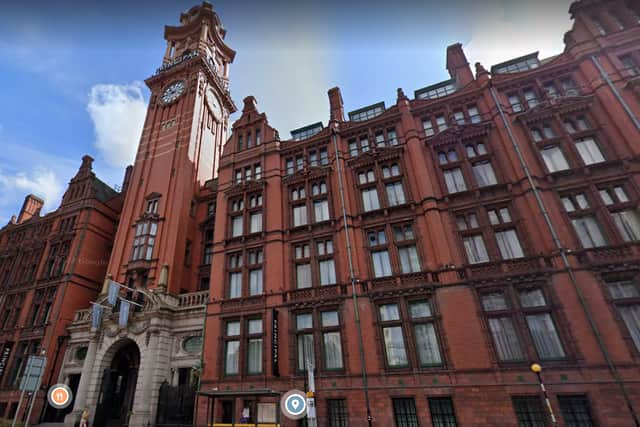
In other words, humans need “visual complexity” – something which is abundant in nature. The star example of an interesting building in Humanise is Gaudi’s Casa Mila in Barcelona, which Heatherwick describes in the books as a “festival for curves” which reflects light “almost as if the building itself is breathing.” Closer to home though, Heatherwick, a former Man Met student, points to the Refuge Assurance building (now the Kimpton Clocktower Hotel) as an example of interesting architecture. In fact, Manchester is full of examples.
Heatherwick said: “Manchester is blessed with some amazing historic buildings but there is no reason why we can't be building buildings that we would fight to preserve in 150 years from now. But you know that so much of what gets built, no one will be standing there saying this has particular value because there's no extra effort in that fabric.”
Sustainability is another factor when it comes to the case for more “interesting” buildings. It’s cheaper than ever to construct buildings, according to Heatherwick, and the average lifespan of a commercial building today is 40 years – which is nothing compared to some of Manchester’s most treasured buildings, like the Refuge Assurance. Construction accounts for 11% of annual global carbon emissions, therefore demolishing buildings after a few decades is the “worst thing” we can do for the environment, Heatherwick argues. Interesting buildings, valued by their communities, are more likely to be preserved and repurposed in the future.
What can we do?

In a city like Manchester, where developers are constantly eyeing up new areas to move into, sometimes at the grievance of local communities, it’s easy to feel powerless, angry even. But that is not a reason to be anti-growth, according to Heatherwick. Instead, he believes we should be empowered to demand more of our planners and developers – and the industry is ready to listen.
Heatherwick explained: “In my mind, Manchester is too small for how significant it actually is for Britain and actually, it's ok to grow the city. But it should be grown in a human way. You can demand that. Don't be angry. Be confident that it matters and that people in the industry will back you. And actually it is much more fun as a construction team making interesting places. We need stories back in our buildings.”
Since Humanise was first published in 2023, the campaign has “gone much further than I thought, already,” Heatherwick said. Starting out with the initial aim of being a 10-year plan to “start 10 million conversations,” the book has been translated into several languages and Loughborough University is even launching a masters program based on the ideas behind the Humanise movement. Heatherwick has held symposia involving a whole host of researchers, scientists and industry leaders – including U+I’s Richard Upton, who has been instrumental in the ongoing Mayfield development in Manchester.
So there is some hope for Manchester, according to Heatherwick and the Humanise movement. He said: “I studied in Manchester, there are thousands of creative people in Manchester who could collaborate with design teams and they could be given the first 40 feet of buildings. Make it interesting, and we'll do our best to build it. If there's anywhere that could do it it's Manchester.”