
Man Utd 2025-26 full Premier League fixtures: Ruben Amorim handed nightmare start to new season
Manchester United are preparing for their second season under manager Ruben Amorim.
After what was a season filled with disappointment last term, Manchester United will be desperate to get into the new campaign and improve upon their 2024-25 performance. The Red Devils finished 15th in the Premier League, in what was their worst finish in Premier League history.
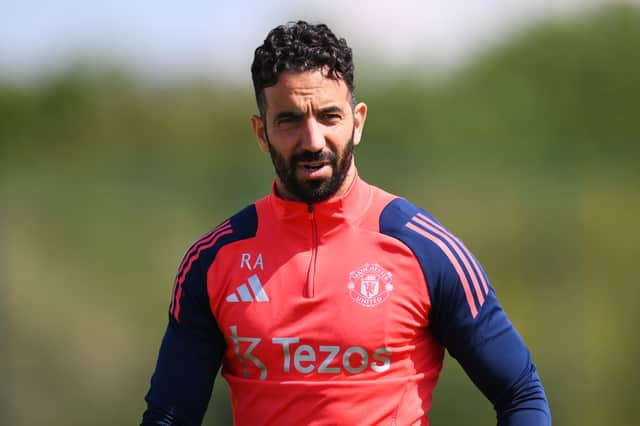

During the transfer window, Amorim is working to improve his squad, having already added Wolves striker Matheus Cunha. He is also hoping to sign the likes of Bryan Mbeumo and a number nine to bolster their front line too.
Man United will be looking ahead to several key fixtures next season, including matches against rivals Liverpool and Arsenal, and of course, the Manchester derby. Furthermore, Amorim will want to ensure his side gets off to a good start, so they’ll be hoping for some manageable fixtures at the start of the season.
Man United’s full 2025-26 Premier League fixtures next season
The Premier League fixtures have now been released. The opening Premier League game will be Liverpool v Bournemouth at Anfield on Friday, August 15. The final round of matches is due to begin on Sunday, 24 May. United have been handed a tough opening five games as they face Arsenal on the opening day as well as games against Man City and Chelsea.
August 17th: Arsenal (H)
August 23rd: Fulham (A)
August 30th: Burnley (H)
September 13th: Man City (A)
September 20th: Chelsea (H)
September 27th: Brentford (A)
October 4th: Sunderland (H)
October 18th: Liverpool (A)
October 25th: Brighton (H)
November 1st: Nottingham Forest (A)
November 8th: Tottenham (A)
November 22nd: Everton (H)
November 29th: Crystal Palace (A)
December 3rd: West Ham (H)
December 6th: Wolves (A)
December 13th: Bournemouth (H)
December 20th: Aston Villa (A)
December 27th: Newcastle (H)
December 30th: Wolves (H)
January 3rd: Leeds United (A)
January 7th: Burnley (A)
January 17th: Man City (H)
January 24th: Arsenal (A)
January 31st: Fulham (H)
February 7th: Tottenham (H)
February 11th: West Ham (A)
February 21st: Everton (A)
February 28th: Crystal Palace (H)
March 4th: Newcastle (A)
March 14th: Aston Villa (H)
March 21st: Bournemouth (A)
April 11th: Leeds (H)
April 18th: Chelsea (A)
April 25th: Brentford (H)
May 2nd: Liverpool (H)
May 9th: Sunderland (A)
May 17th: Nottingham Forest (H)
May 24th: Brighton (A)
Following the season's end, the 2026 World Cup will take place. Therefore, injuries late in the season could become real problems for international teams, making fixture congestion and squad depth increasingly important. Majority of fixtures are subject to change due once broadcast selections are made.
How does the Premier League decide the order of fixtures?
The fixture order process is somewhat complicated, as the Premier League needs to take several things into account when creating the order, such as congestion, home and away composition, and leaving room for FA Cup, International and European matches.
This is what the Premier League says on their website: “We start when we know the composition of each division, so after the last Football League playoff. We place each club in a pairing grid, which defines the dates they will be at home.
“For every date in the season, the fixture computer knows which clubs are at home and who are away and then it will mix them up randomly to determine the matches. In any five matches there should be a split of three home fixtures, two away or the other way around. A team will never have more than two home or away matches in a row, and, wherever possible, you will be home and away around FA Cup ties. A club will never start or finish the season with two home or two away matches because it would be unfair for a team to finish with two aways.
“Around the Christmas period, if you are at home on Boxing Day you will be away on New Year's Day or an equivalent date. We also try to maintain a Saturday home-away sequence throughout the season wherever possible. Most clubs will have a partner club with whom they cannot clash, such as Manchester United and Manchester City, or Liverpool and Everton. In London, it gets a bit more complex and less obvious.”