
We explore inside the abandoned factory nicknamed 'Rochdale's Chernobyl' and reveal its secrets
The wasteland beyond the high fences of an abandoned factory is cloaked in mystery.
Off-limits to the public, the only souls who venture in are the foolhardy ‘urban explorers’ who leave themselves at the mercy of the dangers within.
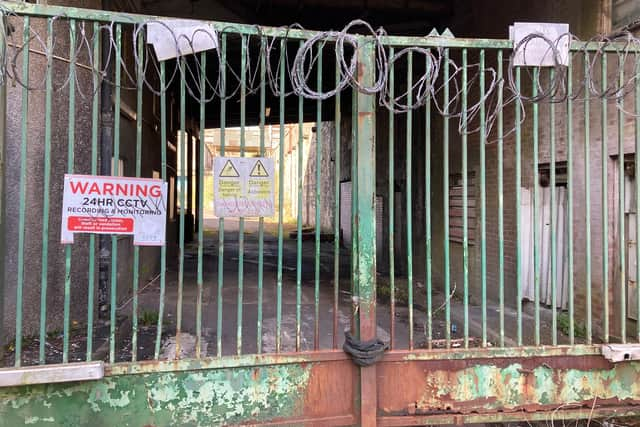

The Turner Brothers factory was once the world’s largest asbestos manufacturer. A massive employer in Rochdale before being shut down in the 1990s, it has been abandoned for decades – an eyesore many locals avoid.
For some, it has been seen as a ‘playground’ for exploration in spite of the hazardous substances once produced on the site.
According to experts, they still pose a threat to those who enter the ruin known as ‘Rochdale’s Chernobyl’.
For the first time in years, the tall razor wire-topped gates of the site were opened to the Local Democracy Reporting Service, revealing secrets previously hidden to outsiders.
Stepping through the entrance from Spod Road, like previous generations did in their thousands, the creaking of the metal roofing succumbing to the autumn wind reiterates how much of a crumbling wreck the place is.
Trudging through puddles into a square surrounded by the old office blocks, an alarm went off almost instantly. Clearly not all the security systems have been broken on the 75 acre site.
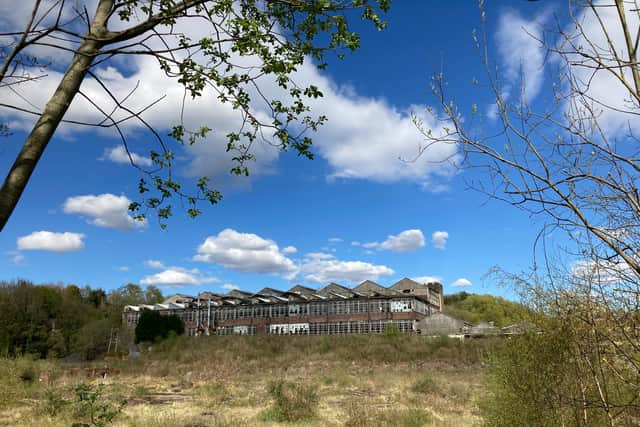
Spodden Park Ltd are the latest site owners to try and tackle this redevelopment conundrum.
Their surveying consultant, Suly, outlined to the LDRS why they are different to their predecessors as he led us down tracks weaving over concrete, where old factory buildings had previously been demolished.
The firm, he says, is headed up by remediation specialists, who have experience with old factory and manufacturing sites littered with hazards.
He explained that the slow progress on the redevelopment is the result of endless surveys and assessments, and described this as evidence they’re doing things properly.
Previous redevelopment plans have come and gone, including a 650-home estate. Suly’s eyes widened as he described that number as ‘unrealistic’ thanks to the number of trees and the topography of the landscape.
Although houses on the site are widely anticipated as part of the redevelopment, Spodden Park Ltd have remained tight-lipped on their proposals – which are expected in 2026.
Walking through the path shrouded by a plethora of Japanese knotweed shrubs, Suly pointed out some breaches in the fences as well as a smashed up CCTV camera.
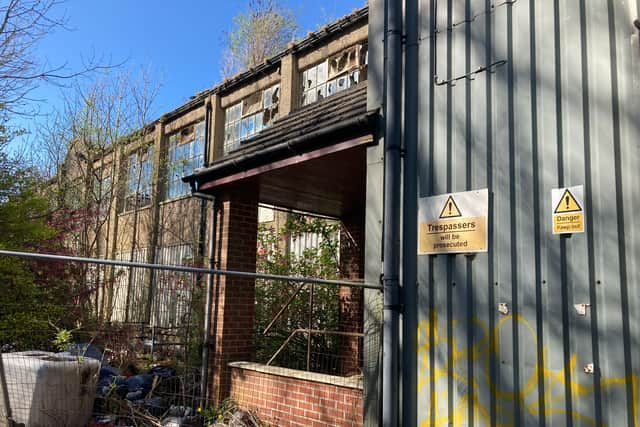
This is an example of the biggest issue the site has faced recently – trespassers.
Suly told the LDRS: “Because trespassing has been getting quite bad, especially during half term, we’ve had a community safety meeting with Rochdale council to see how we can prevent this issue happening again. How we can mitigate kids coming on site.
“They are looking to liaise with police on how they can potentially have community safety meetings in schools about the danger of coming onto this site and the danger of disturbing the asbestos and what that can do.
“Some people just don’t understand this stuff, this is like a playground to them. We haven’t taken legal action yet because some of them are kids. But we’ve improved signs around here which signpost danger and that we will take legal action.”
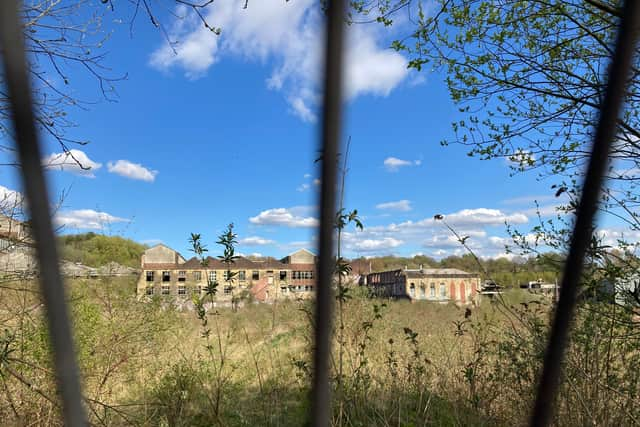
People known as ‘urban explorers’, who film themselves going into abandoned buildings and dangerous spots, have been frequenting the site.
Their videos, shared on YouTube and other social media platforms, showcase the rubble and collapsed interior of the vast industrial complex.
In a bid to stop them, a site team has been out plugging holes in the fences in recent months. And have been employing new tactics to prevent further breaches in the future.
While trying to avoid taking trespassers to court, Suly admitted it may be action they’re forced to take if things don’t change.
Turning a corner and heading up an incline to where the main manufacturing building is based, it’s hard to believe this area was once an industrial behemoth. There is greenery everywhere.
The landscape is littered with all manner of birds, squirrels and wildlife. Two roe deer even made a guest appearance during the LDRS’ visit, gliding through the trees and off into the distance.
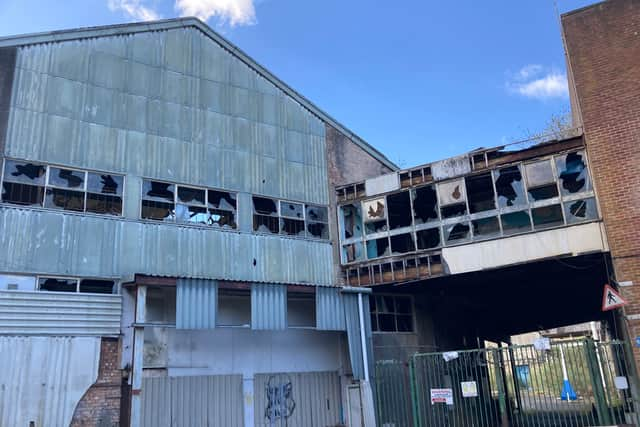
Just 30 years ago, what is now a wildlife oasis in the shadow of an eerie factory complex was the heartland of a production line of the silent killer, asbestos. According to the site owners, the grounds in the immediate vicinity of the buildings don’t have asbestos underneath, but there is still asbestos present within the degrading buildings.
It’s clear they will need to be demolished safely before they become an even bigger health hazard. This was the obvious reason the inside of the wrecked buildings did not form a part of Suly’s guided tour.
Asbestos is a group of six naturally occurring, fibrous minerals that were once widely used in various products due to their resistance to heat, fire, and chemicals. The substance is now known to be a carcinogen, and exposure to asbestos fibres can lead to serious health problems, including mesothelioma and lung cancer.
Suly knows all too well the danger asbestos can pose, his grandad used to work at Turner Brothers after all. Now Suly is part of the team hoping to bring the site back into use again, something he agreed felt like a full circle moment.
He understands the local concern about redeveloping the site, but like many local people Suly wants to see the old Turner Brothers factory regenerated in a safe way. Skepticism is rife locally, which is understandable given how the asbestos scandal was hidden for so long.
Although ‘Rochdale’s Chernobyl’ hangs over the area of Rooley Moor Road like a dark cloud, there are happy memories here. Knocking on doors just a stone’s throw from the factory, they all regale stories from the glory days of their family members working at Turner and Newall and the positive work culture it provided.
The factory even had its own sports teams, it is understood. So it wasn’t just asbestos the factory produced – and it produced a lot.
The creation of asbestos products began on the site in 1879, and by 1970 the factory was estimated to have an annual output of around 2,250,000 yards of cloth and 5,500,000 miles of yarn – all made from asbestos.
After the walk through the old asbestos factory concluded, Suly locked the front gates behind us.
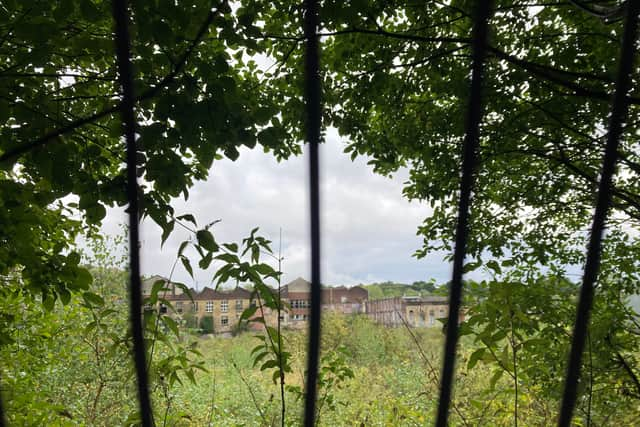
Before parting ways, he wanted to stress the importance of warning against trespassing the site as well as the site owners’ genuine intention to remediate the area so it’s safe for locals once again – a repeated message in recent months.
The latest monthly update from the Spodden Park team read: “We have recently met with the council and their community safety team. During the meeting, we discussed the challenges of securing the site against determined trespassers.
“We informed the council that the fence is being regularly damaged and that we have had incidents where CCTV cameras have been destroyed.
“Several options for how we could work with the council to address these issues were raised, and we hope that these will help to keep the site secure.
“We want to remind everyone that asbestos is only dangerous if it is disturbed. By entering the site, these trespassers risk disturbing the material and put themselves at risk.
“So that we can share more meaningful plans with you, we are planning to host a consultation in the new year, where we will present information on the proposed scheme and ask for your feedback.”
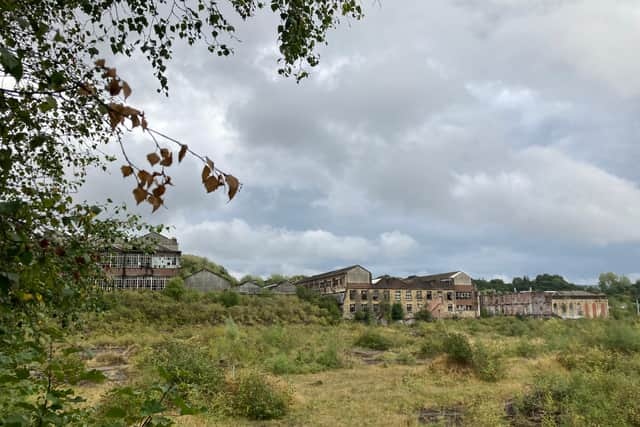
There have been long periods of uncertainty surrounding the redevelopment of ‘Rochdale’s Chernobyl’. This started back in 2004 when controversial plans to build 650 homes, a children’s daycare centre and a business park on the land, were tabled. Those proposals were eventually thrown out by Rochdale council in 2011.
The next hope of development came through ESG in 2021 – which ended in disappointment. Planning permission was refused after MMC Estates failed to carry out a £500,000 investigation into contamination on the site. A few years later, in 2014, a fire ravaged a section of the factory buildings.
Now Spodden Park Ltd are next in line to put forward their vision. Their hope is to succeed where all others have failed.