
The controversial Greater Manchester housing estate where a street was nearly named after Hitler
It was a story I wrote in 1989 from Bolton’s council chamber, 10 years into a journalistic career that comes to an end this Yuletide.
But the piece I bashed out on an old typewriter, long before the internet was invented, went around the world – an audacious idea to name the streets of a controversial housing estate Hitler Avenue, Goering Way, and Belsen Crescent.
Protesters had fought for several years to prevent developer Barratt from building 475 houses on green land at Brirtenshaw Farm in Bradshaw.


Bolton’s planning committee had turned down the application and an independent planning inspector also stood firmly against the development when Barratt appealed.
But Nicholas Ridley, who was then Margaret Thatcher’s environment secretary, overruled everyone and allowed the development to go ahead.
Thereafter, you could taste the fury of residents and councillors.
Hundreds of residents had carried out ‘stand on the land’ protests and raised thousands of pounds to challenge the Government in a judicial review, to no avail.
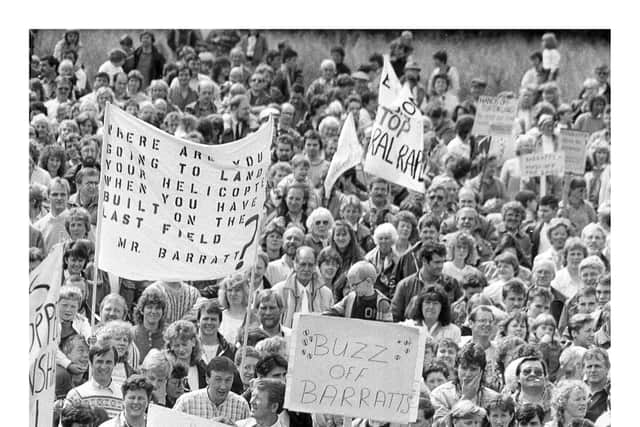
The legal loophole that allowed this to happen was a covenant drawn up in 1934 protecting the land from development, which, because of the outbreak of the Second World War, had never been officially registered.
And it was that link to the war that gave the then deputy leader of the council, Coun Guy Harkin [now deceased], the idea to try. as an act of retribution to dent the Barratt profits, by naming the streets after Nazis.
Under planning law, the council was legally entitled to choose the names of the new streets.
“Let’s see you get £100,000 for houses in streets named like that,” he said in the council chamber.
He later stood by the comments he made at the meeting saying: “If the residents of Bradshaw say it is a good idea that will lower Barratt’s profitability, then I will argue their case in the council.
“What we have always said is that we will do what the residents want us to do, subject only to the law being upheld. I am certain this would depress property values.
“It would put me off if I were a property developer. There are not several hundred Nazis fanatics in Bolton.”
Of course, his idea never came off. The authority took the view that Barratt would appeal any such plan.
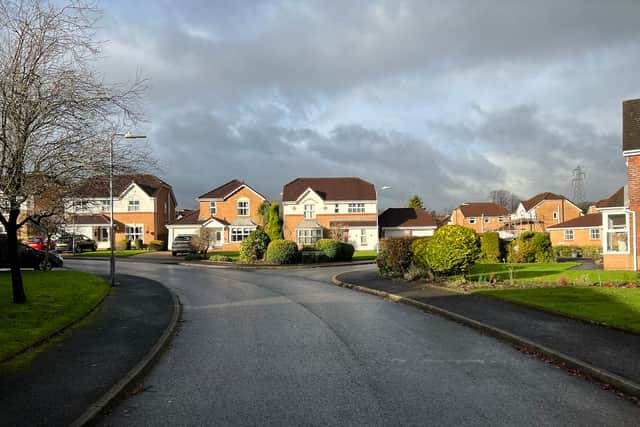
And today, according to residents living in the homes that have been standing there now for more than 30 years, if their street had been so named, they would never have bought them.
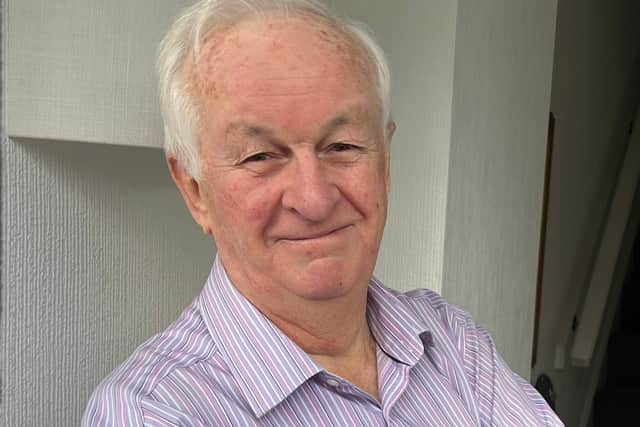
Ian and Beverley Middleton live on Aire Drive and, back in the 1980s donated money to the protesters’ cause, although they didn’t participate in the campaign.
“Our own house was up for sale in the early 2000s and it sold quite quickly. We needed to find somewhere fast, and this was it,” said Beverley. “But if the street had been called Hitler Avenue, Goering Way, or anything like that, we would not have bought it.”
Ian added: “The protesters were right about the traffic at the time, because it’s even worse now. Getting through the traffic lights at [nearby] Bradshaw Brow can take an awfully long time. Traffic can back up right into Bromley Cross.
Neighbour Gill Olive, agreed with the Middletons: “There’s no way I would’ve bought this house if it had been named after Nazis. I lived on Crompton Way, and I was aware of the controversy at the time and I knew about the protesters, but I needed somewhere to live, so here I am.”
Another neighbour is Paul Smith. “I was one of the protesters,” he said. “I only came to live here eight years ago. But we were right about the traffic. My daughter, who lives near here, has got to get out before 7.30 am to get our grandchildren to school. And no, I wouldn’t be living here if the street had been named Hitler Avenue.”
One resident, who did not wish to be named, but who lived opposite the site in 1989, described what happened the day the bulldozers arrived to begin construction.
“There were a lot of angry protesters lining Turton Road, the boundary of the site,” he said. “As the bulldozer went through the first hedge of the field, lots of wildlife – birds, rabbits, mice and squirrels came running out in terror. No-one shouted, they just cried.”
Don Tonge was a freelance photographer who took pictures of the ‘stand-on-the-land’ protest.
“I’ve never known a bunch of people so angry about something,” he said. “But it was amazing how the whole issue brought the community together. You wonder if something like that could happen now.”
There are now only four councillors still serving who were on the authority in 1989.
Coun Linda Thomas, now 73, had been on the council for just 12 months at the time.
She said: “I remember some of the senior councillors involved – they were titans of their time – Jack Foster was chairman of planning and his deputy was Peter Finch. I wouldn’t say I was intimidated by them, but I was in awe at what was going on at that time. I remember how controversial the planning application was and how we were all up in arms and how every effort was made to stop it. But there came a point when it just wasn’t possible to carry on.
“They tried to mitigate it because they couldn’t continue to fight over it, but the public didn’t accept that.
“I remember one night in the council chamber, the protesters from Birtenshaw were in the public gallery and they had been standing on the land. They threw paper aeroplanes down on to the councillors. And then the council chamber was locked down and they emptied the public gallery.”
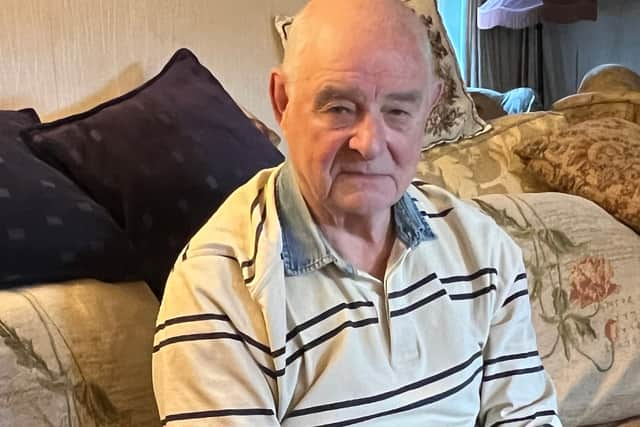
Another is Liberal Democrat Coun Roger Hayes, who reminisced about the days in the 1980s when the then leader of the Labour group, Coun Bob Howarth [now deceased], would occasionally let his deputy, Coun Harkin, ‘off the leash’.
“The interesting thing is that it was in the Bromley Cross ward,” he said. “For Labour, who had no councillors there, it was really about having a go at the Tories.
“And Bob Howarth, I’m convinced, wanted the development to go ahead, because he was thinking of all the council tax income that would be coming in. Because Bob was always one for the finances.
“And he probably wanted it to go ahead, but they couldn’t say so because of the public outcry. The protesters even put an Independent candidate up, who got 600 or so votes.
“I remember, I addressed a meeting of the campaigners and I was very unpopular with the Labour group.”