
I had really frightening experiences but my phobia of needles was stronger than my fear of not walking again

A woman with a severe needle phobia has described how she discharged herself from hospital – despite needing treatment to prevent her becoming paralysed.
Sarah, 30, from Prestwich, has opened up about how the phobia prevented her from attending vital blood test appointments, receiving urgent medical care and living life to the full.
Born with Von Willebrand disease, a rare form of haemophilia that affects the blood’s ability to clot, Sarah, who didn’t want her second name released, needed to have regular blood tests to monitor her physical health. As a child, she spent a lot of time in and out of hospital and would need blood transfusions after something as simple as a nosebleed.
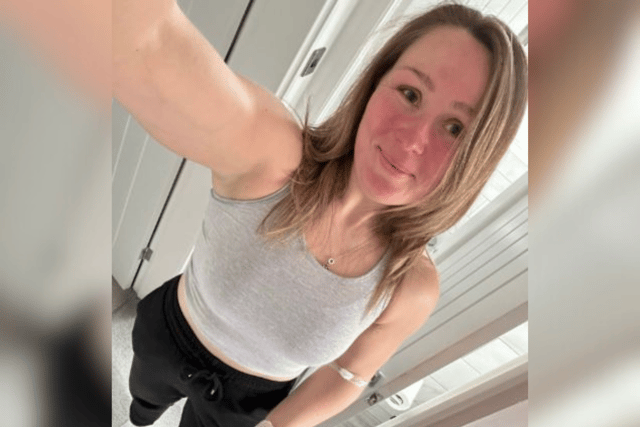

As she grew older and needed more treatments and tests, her phobia grew stronger. She said at every appointment she would ‘cower away, cry, and ask to be left alone’.
Sarah said: “I didn’t understand what was happening to me, or why I had to go through these really frightening experiences so often.” At the age of 15, she needed surgery for a broken collarbone, but the added risks from haemophilia meant she needed blood thickeners.
The process was particularly traumatic, as the medical team needed several attempts to find a vein. “It was really painful, I was inconsolable and it left me feeling even more terrified than I was before,” she said.
By her early 20s, Sarah had begun to ignore appointment letters and was eventually discharged from the service. “I had a new-found sense of control with being an adult and being away from home, ” she said.
“I’d got to the point where I felt I’d been all right for such a long time without a test, that I started to get comfortable with it. “I felt like I could live without them and ignore my situation.”
However, when she turned 21, Sarah became severely anaemic and was rushed to hospital. She refused to have a blood transfusion as her phobia took hold, and it was only when the medical team stressed how life threatening her condition was, that she accepted a transfusion.
“They told me I was close to having a heart attack. I was desperate for a way out, but on this occasion, I knew I had to do it to save my life.” Sarah’s phobia also influenced choices about her future.
She said: “I’d always ruled out having children. “I knew how closely I’d need to be monitored during pregnancy, so it meant that it was just completely off the cards for me.
“I’d always wanted to travel, but so many countries need immunisations and vaccines before you can fly, so it really limited my options as to where I could go.” But her true turning point came in December 2022, when Sarah found herself almost paralysed by a bleed on her spinal cord and was urgently referred for spinal surgery.
She panicked at the thought of needing a blood test again and discharged herself against medical advice. Still unable to move, and with her condition worsening, she was taken back to the hospital.
“I just couldn’t accept what they needed to do,” she said. “At that time, my phobia of needles was stronger than my fear of not walking again.”
Eventually they gave an option to put her to sleep before starting the surgery and using any needles, so Sarah agreed to go ahead with treatment.
After nearly three weeks in the hospital recovering, Sarah had an appointment with her haematologist, who mentioned NHS Bury Talking Therapies, run by Pennine Care NHS Foundation Trust.
Sarah met with Joanne Gisbourne, cognitive behavioural therapist, and immediately noticed an improvement. Sarah said: “Joanne knew exactly what to do. She understood me and knew the right stepping stones for me.
“She was incredibly patient and reassuring and worked flexibly around me to get the best possible results.” Joanne arranged for Sarah to speak with an expert doctor to explain in detail about the different types of needles, how they work and what they are used for.
“No-one had ever explained them properly to me as a child,” she said.“ So it felt like I was having blood taken and all these procedures for no reason.
“The mystery suddenly went away. I always thought there had to be an easier way, but now I understand their function and how necessary they are.”But Joanne didn’t stop there. She also reached out to Sarah’s local GP and asked for her to be able to sit in on someone having a blood test.
They agreed to let her sit in on a nurse’s appointment, and this helped to desensitise her even further. After 11 sessions, Sarah has been able to overcome her phobia.
She said: “For the first time in my life I can think about needles and not feel anxious or afraid. I feel like I’ve got control over my body again and can live a much healthier and fulfilled life. I am so grateful.”
Joanne Gisbourne, cognitive behavioural therapist, said: “We provide psychological interventions for adults experiencing common mental health issues, including specific phobias. “Cognitive behavioural therapy focuses on helping people to understand the link between their thoughts, feelings and behaviours, and supporting them to make changes to improve how they feel and their quality of life.
“It’s fantastic to hear how much our service has helped Sarah and we wish her all the very best for a brighter future.”