
Police confirm dozens of suspects remain at large in wake of 2024 Southport stabbing riots

Dozens of individuals suspected of taking part in riots that erupted across the UK last year remain at large, police have confirmed.
A police spokesperson said the force’s ongoing commitment to identifying those involved serves as a clear message to potential troublemakers not to repeat last year’s violence.
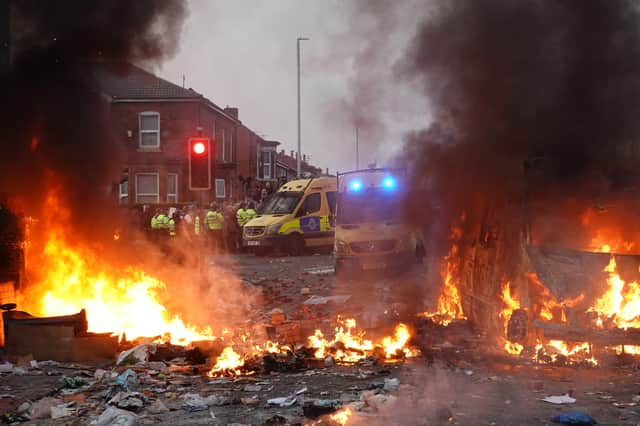

Authorities are preparing to launch a website featuring images and information on approximately 40 suspects still being sought by five police forces: Merseyside, Greater Manchester, Cleveland, Northumbria, and Avon and Somerset.
The disturbances spread nationally in the aftermath of the Southport murders, following false rumours that the perpetrator was a Muslim immigrant. According to the National Police Chiefs’ Council, the unrest resulted in 1,876 arrests, with 1,110 individuals charged to date.
Data from the Crown Prosecution Service shows that, of the 859 cases related to the disorder, 821 had resulted in convictions by the end of March this year.
More recently, protests have taken place outside a hotel in Epping housing asylum seekers, following the charging of an asylum-seeker accused of attempting to kiss a 14-year-old girl. Additional protests have been reported in Norfolk and London, though widespread disorder has so far been avoided.
Police officials say they are working “very hard” to manage “small pockets” of disruption this year. Last summer’s unrest included attacks on mosques and accommodations for asylum seekers, actions that Prime Minister Sir Keir Starmer condemned at the time as “far-right thuggery.”
Police chiefs are now launching a national appeal for suspects wanted in connection with “significant” public order offences, including brick-throwing and serious assaults on members of the public. Efforts to trace suspects have included the circulation of images via local and social media.
Senior officers noted that some individuals may have travelled from other parts of the country to take part in the disorder.
Assistant Chief Constable Ian Drummond-Smith led investigation into the riots and said: “We have a duty to facilitate protest… but what we saw last year - and in a few isolated cases this year - is where it’s gone to criminality and to serious disorder.
“In those cases what I think we can learn from last year is that justice will be swift, and I hope that that would be a deterrent to anyone thinking about engaging in serious disorder this year. We’ve made effective use of CCTV, body-worn video, and we’ve been able to bring a lot of people in front of the courts.”
“I think they’ve been isolated because of a swift police response to them, and I think that’s the key thing. If we can respond to serious disorder swiftly, I think we can contain that and prevent it from spreading across the country, so that’s what we’re working very hard on.
“We’ve sharpened up our ability to mobilise quickly and move resources around the country so we can achieve that quicker. One year on, we’ve still got some people who we have got good images of and we haven’t yet identified. I think the key thing is having a good image of someone is one thing, knowing who they are is another.
“We’re asking the public to have a look, and if they recognise anyone in those images, to let us know who they are and bring them to justice.”