
Manchester mud-larkers descend on arid canals after 'one of driest springs and hottest summers on record'

England's dried-up canals have become a magnet for mud-larkers who are using the opportunity to search for discarded items.
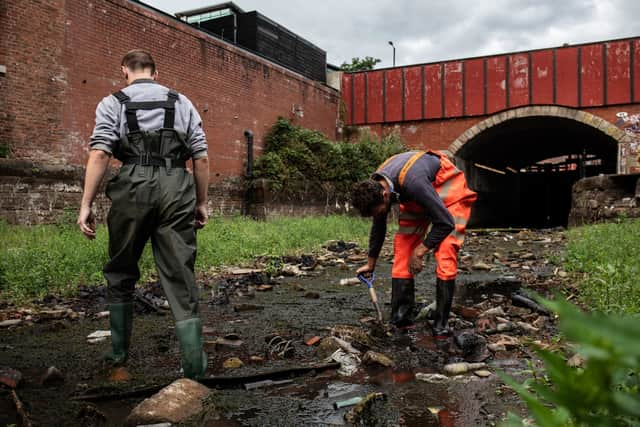
The recent dry weather has resulted in stretches of canal being totally drained and becoming overgrown with grass and vegetation. Robert Lawton and Liam Kinder, both 33, are among those who have begun trawling through a dried up stretch of the Rochdale Canal in Manchester city centre.
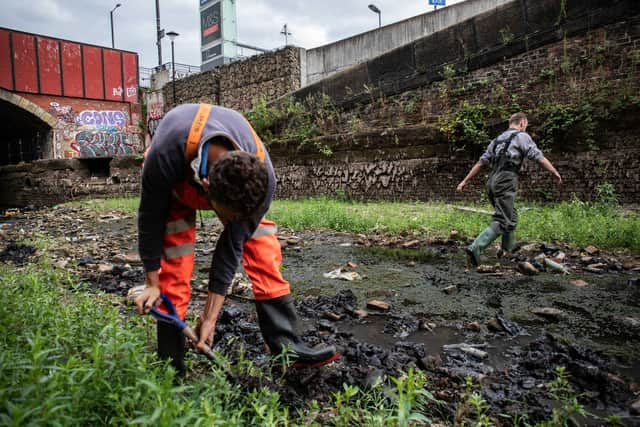

The regular magnet fishers have started to trawl through the canal on foot as reservoirs have been left dry following months of low rain. Dad of three Robert said: “I’ve never seen that stretch look like that before. I’ve seen them when they’re deliberately drained for maintenance and stuff like that.
“But never for this long and left like that – usually when they’re drained for maintenance they get cleared out, so you don’t get a chance to find anything. Now it’s been left empty for a while there’s plenty of stuff popping up.”
The pair have found old bottles, clay pipes, and even jewellery in the canal, which was officially opened in 1804. Builder Robert said: “Nine times out of ten it’s absolutely just junk, then one time out of ten it’s something you want to keep and take home.
“It’s mostly stuff that 100 years ago people would have deemed rubbish, but now because it’s 100 years old we think it’s not rubbish, so we take it back out. It’s a bit disarming when you go down there and you see the amount of rubbish down there.
“All the fish are trapped in little pools, the odd deep pool is absolutely teeming full of fish because they’ve got nowhere else to go – obviously they’re dying, they’ve got no food now.”
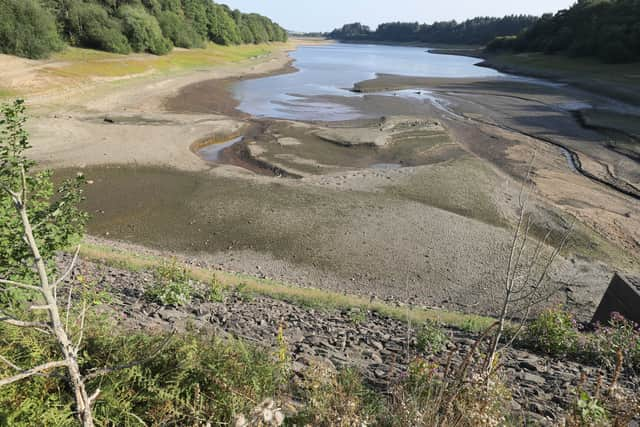
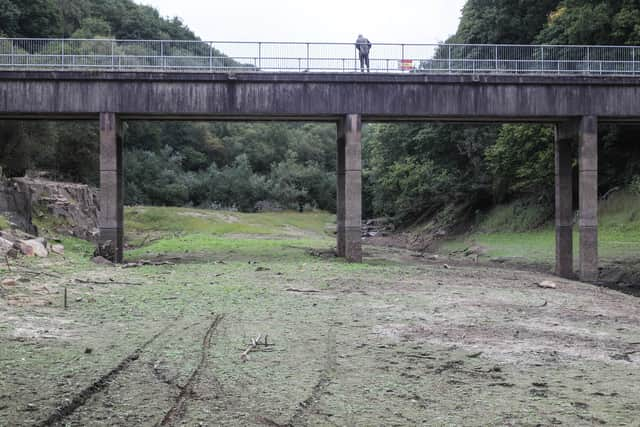
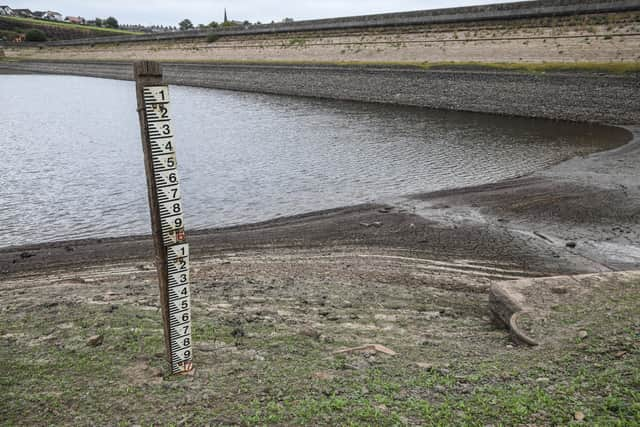
Photographs show Jumbles Reservoir and Wayoh Reservoir, in Lancashire, turning green with grass and other vegetation as low levels continue. Water company United Utilities says levels in the north west have dipped to 54 per cent, compared with 75 per cent at the same point last year.
In the Pennines reservoirs are at just 36 per cent of capacity – well below levels at the same point last year of 67 per cent. Canals across the region, going in to cities including Manchester and Leeds, have had to close due to low levels.
Boaters on the Huddersfield Narrow Canal, Ashton Canal, Rochdale Canal, and the Leeds & Liverpool Canal have been left unable to move because of the low levels. The Canal & River Trust, which manages the canals, said dry weather and heatwaves were to blame for the low levels.
Earlier, the Canal and River Trust’s Matthew Symonds commented: “Our canal network is feeling the strain after one of the driest springs on record and several heatwaves already this summer.
“On-the-ground teams are carrying out numerous tasks to manage water, including manually operating pumps, sealing up lock gates with ash, putting in stop planks, making ‘quick win’ leak repairs, checking flow gauges, and keeping feeders clear.
“Volunteer lock keepers are working with boaters to manage boat traffic at lock flights to save as much water as possible. Behind the scenes, our hydrology experts are keeping a day-to-day view of levels and planning for a range of scenarios based on projected demand and rainfall to see how to make best use of the available water.”
Grant Batty, water services director at United Utilities, said: “We want to thank our customers for everything they have been doing to help protect water supplies and we’re asking them to continue to do their bit.
“74% of customers are aware of the impact of dry weather on water resources, and we have seen a fantastic response from customers with increased leak reporting and a reduction in demand.
“In some areas we’ve seen a great response to free home water audits, which helps customers to take practical steps such as fixing leaky loos to save water and money on their bills.
“We are working hard to carefully manage our water resources through our vast integrated network of pipes to move water around from one part of the region to another, where it is needed and will continue to monitor the situation daily to ensure we manage and balance the water needs of people and the environment in the best possible way.”