
Inside the policing operation behind Manchester United’s highest-profile Premier League fixtures

Policing a major football match at Old Trafford in 2025 is a highly coordinated, intelligence-led operation, one that reflects the evolution of modern football and the specialist role of Dedicated Football Officers (DFOs) at Greater Manchester Police.
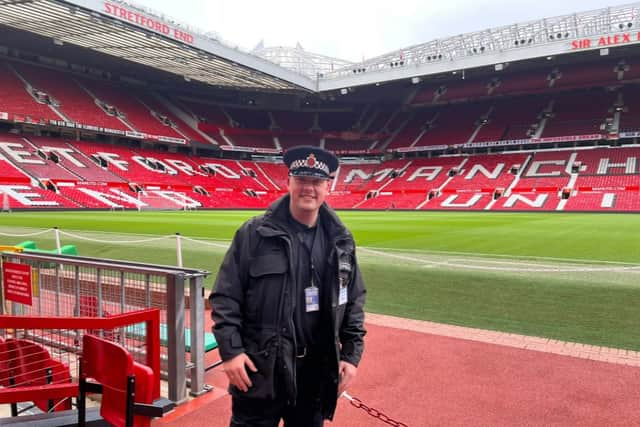
With Manchester home to two of the world’s biggest football clubs and numerous local teams, the responsibility of ensuring fan safety falls to GMP. At the heart of this effort are the DFOs, officers assigned specifically to football clubs who work year-round, not just on matchdays, to minimise risk and support safe, enjoyable experiences for supporters.

A specialist role for a modern game
DFOs are trained to manage all aspects of football policing. Unlike traditional matchday roles, they act as direct links between police forces, clubs, and fan groups, working both behind the scenes and on the ground.
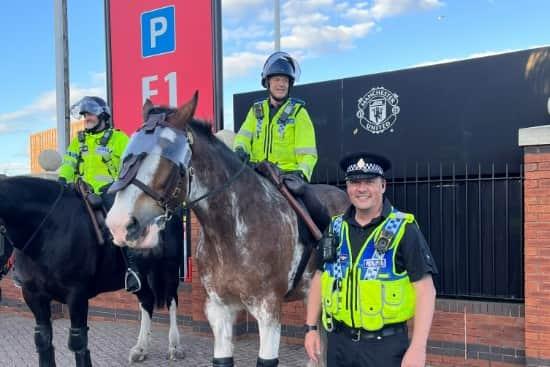
They prepare intelligence reports, coordinate with club safety officials, gather evidence to support Football Banning Orders, and engage with supporters before, during and after matches. Described by GMP as ‘neighbourhood officers for football,’ DFOs use familiarity and trust to de-escalate tensions and foster cooperation.
Every club in Greater Manchester is supported by DFOs, with Premier League clubs like Manchester United and Manchester City each assigned their own.
Manchester United vs Chelsea: A case study
The recent Premier League fixture between Manchester United and Chelsea at Old Trafford highlighted how modern football policing works in practice.
PC Oliver Mayall, the DFO assigned to Manchester United, led the police planning for the event, which despite its high profile, was categorised as a “medium risk” fixture based on factors such as kickoff time, expected crowd behaviour, and historical incidents. Planning began weeks in advance.
The operation was led by Chief Inspector Jamie Collins, a senior officer with over two decades of experience in event policing. GMP coordinated with key partners including Manchester United’s safety team, Manchester City Council, the North West Ambulance Service, Greater Manchester Fire and Rescue Service, British Transport Police, and Transport for Greater Manchester.
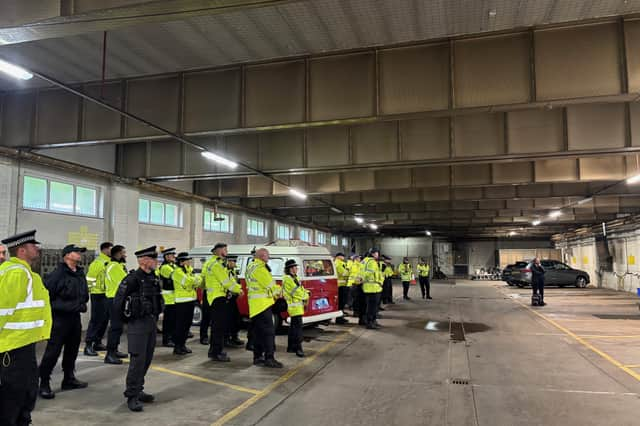
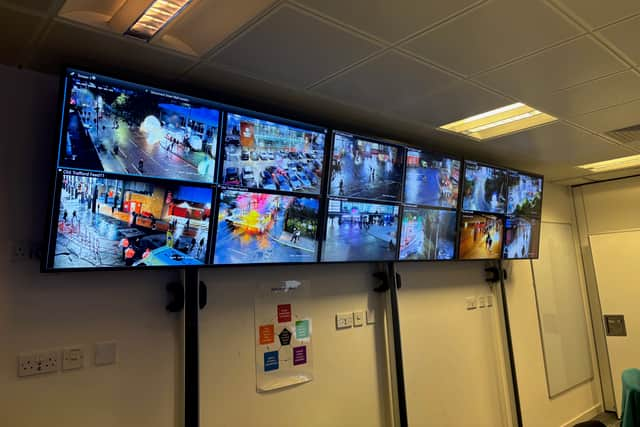
On matchday, a full command structure was deployed — with officers based both at Old Trafford and GMP headquarters. Briefings were held before, during, and after the game to share intelligence and respond to emerging issues in real time.
Coordination with the Metropolitan Police Service and Chelsea’s own DFO ensured the safe movement of away fans, including detailed knowledge of coach arrivals, fan routes through Manchester, and individuals who might pose a risk.
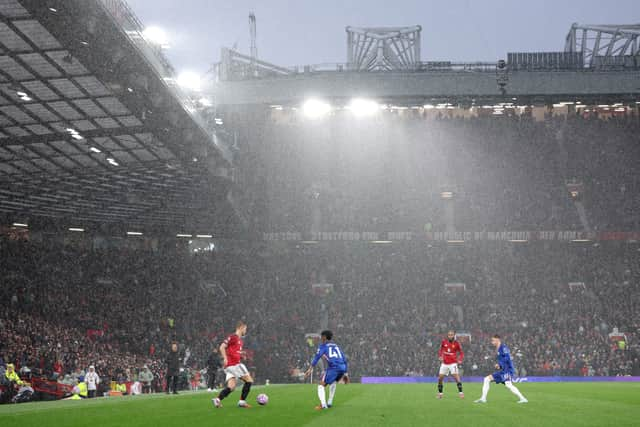
Despite poor weather, the match was largely trouble-free, with the vast majority of the 74,000 attendees behaving responsibly. Only two arrests were made — both involving away fans, one of whom was charged with possession of cocaine. GMP also responded to instances of discriminatory chanting from home fans, leading to ticket cancellations and further investigation.
DFOs were able to act quickly, supported by information-sharing agreements with the clubs that allow for real-time decisions and swift enforcement action, including Football Banning Orders.
"We want to be there to help" and intelligence-led policing
Chief Inspector Jamie Collins described the operation as ‘an overwhelming success.’ “The match passed by with minimal incidents,” he said. “We plan the event in great detail as our overall aim is to ensure that match-going fans have the best and safest experience possible.
“Our DFOs do an incredible job at working with supporters, fan groups and key stakeholders to build relationships. I ask officers to go out and communicate with supporters — that way we can nip problems in the bud before they arise.”
PC Oliver Mayall explained how the DFO model has changed the way police engage with the footballing community. “By working closely with clubs and supporters, my role is in place to identify and address potential issues before they escalate,” he said. “We are now more intelligence-led than ever.
“DFOs use in-depth knowledge of their assigned clubs and fanbases to develop targeted strategies. Through regular dialogue, we build trust with fans, encouraging self-regulation and positive behaviour.”
DFOs also brief Operational Football Officers (OFOs), who are deployed on matchdays to monitor fan behaviour, enforce the law, and maintain public safety.
A model for the future of football policing
The approach reflects the broader shift in football policing, where data, intelligence, and community engagement are prioritised over blanket enforcement. Recognising that not all fans pose the same risks, DFOs ensure police responses are proportionate and effective.
As football continues to evolve both culturally and commercially, DFOs remain central to maintaining order while protecting the vibrant, inclusive atmosphere that defines the modern game.
Their work in fixtures like Manchester United vs Chelsea shows how targeted policing, informed by local knowledge and mutual respect, can deliver safety and security without compromising the matchday experience.