
Two of the world's rarest endangered big cats arrive at Chester Zoo as part of a conservation programme

Two of the world's rarest big cats have arrived at Chester Zoo as part of a conservation programme to help save their endangered species from extinction.
Northeast African cheetah brothers, Kendi and Tafari, have travelled 100 miles from Yorkshire Wildlife Park to Cheshire as part of a specialist breeding initiative. But it wasn't the smoothest of arrivals with comical footage showing one of the clumsy cheetahs taking a tumble from a tree as he struggled to explore his new surroundings on Friday (31/10).
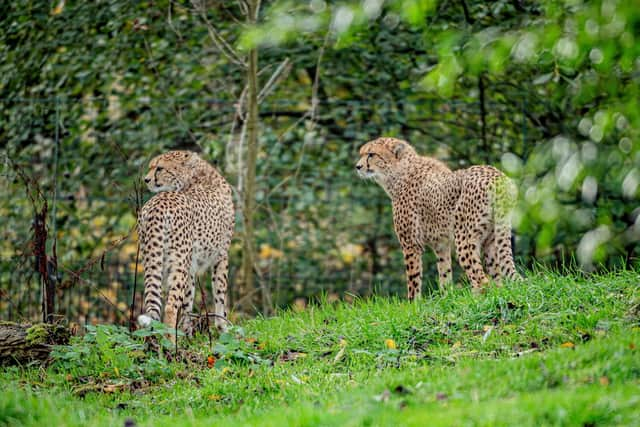

It is hoped the one-year-old pair will later be able to impress genetically matched females and breed to increase the numbers of "safety net" populations in zoos. Conservationists are hailing their "special arrival" as an "important step" towards ensuring the continued survival of the species, which is classed as endangered.
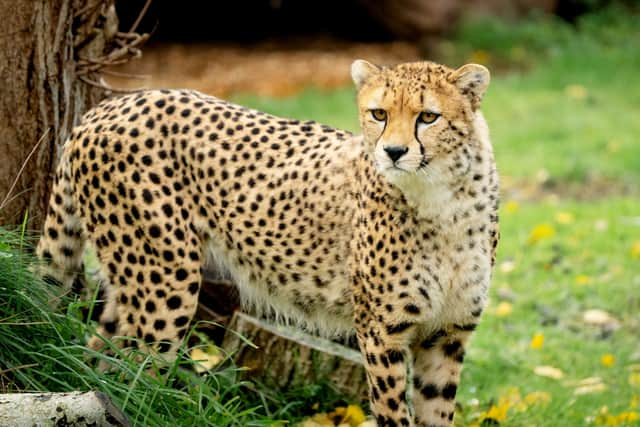
Northeast African cheetahs are one of the world’s rarest big cats, with fewer than 500 now estimated to remain in the wild. Dayna Thain, carnivore keeper at Chester Zoo, said: “The arrival of Kendi and Tafari marks a significant moment for cheetah conservation.
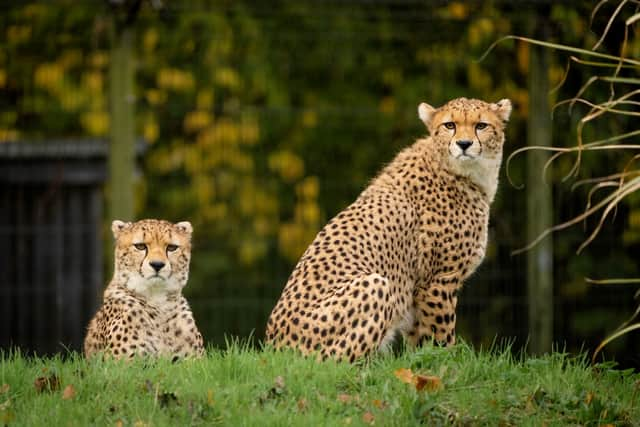
"At 18 months, the brothers are at a natural stage to become more independent. Young, inquisitive and confident, they’re already making themselves at home. It’s great to see that they share such a close bond as they’ve been inseparable since the moment they arrived - spending much of their day side-by-side as they explore their new home together.
“Northeast African cheetah are one of the rarest big cats on the planet and so, in time, we’ll be looking to introduce genetically matched females to them as part of the endangered species breeding programme. Every successful pairing and every cub born represents a crucial step in the right direction for their ongoing survival.
“In the wild, their range is now reduced to just a fraction of what it once was only three decades ago - a stark reminder of how quickly species can disappear when habitats are lost or fragmented. That’s why our work to ensure a healthy safety-net population in conservation zoos has never been more important.
"Alongside this, our conservationists are working in the field in countries like Uganda to protect threatened wildlife and the habitats they depend upon. Together, we’re hopeful that these efforts will help create a brighter future for some of Africa’s most iconic species, like the Northeast African cheetah.”
Adorable images and footage has captured the moment the duo stepped into their new home - curiously and playfully exploring their surroundings for the very first time. Just 30 years ago, several thousand roamed across Northeast Africa but latest research shows that they are now only found in small, fragmented populations.
They can still be seen in South Sudan, Uganda and Ethiopia - having become virtually extinct in the countries of Somalia, Kenya and Sudan, according to the zoo. They say cheetahs continue to face mounting threats from habitat loss, conflict with humans as cheetahs turn to hunting livestock and the illegal wildlife trade.
The species is listed as endangered by the International Union for the Conservation of Nature (IUCN). The brothers will join the Heart of Africa enclosure which opened in March and is the largest zoo habitat ever created in the UK and home to 57 iconic African species.
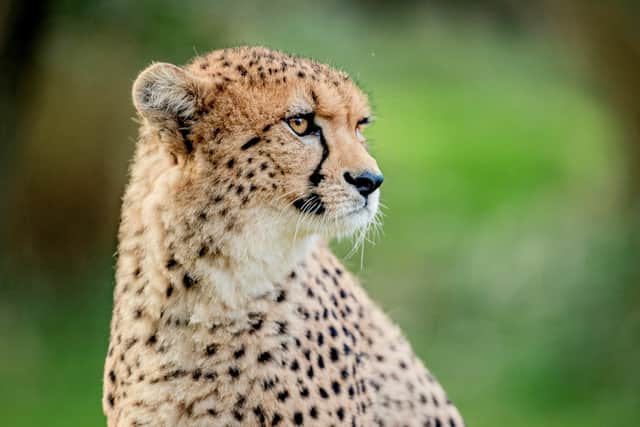
Northwest African cheetah fact file:
- Subspecies: Acinonyx jubatus soemmeringii
- Conservation status: Endangered (IUCN Red List)
- Wild population: It’s estimated that around 500 remain in the wild
- Threats: Habitat loss due to agriculture and urban expansion, human-wildlife conflict (retaliatory killings following livestock predation), poaching, and the illegal pet trade
- Unique behaviour: Male cheetahs, often brothers, form strong lifelong bonds known as ‘coalitions’
- Speed: The fastest land mammal on Earth, capable of reaching speeds of 70mph in short bursts