
Covid-19: Seven things we learned from this week’s Greater Manchester data

Here is a look at the latest numbers related to the novel coronavirus in the city-region.
The Greater Manchester Combined Authority (GMCA) has released the latest Covid-19 data for the city-region.
Here are seven things we learned from the latest statistics concerning the novel coronavirus in our area.
Manchester is now in the middle of the Greater Manchester boroughs for cases
Manchester’s case rate for the week ending 27 August was 299.2 per 100,000 residents.
This placed the city fifth among the 10 Greater Manchester local authorities.
Stockport, Salford, Tameside and Trafford all had higher rates for the most recent week of data.
Manchester’s figure is well below the rate of 426.7 cases per 100,000 residents in Tameside, the highest in Greater Manchester.
Manchester’s rate is also below the figure for Greater Manchester as a whole, which is 311.1.
Manchester is also bucking the broader week-on-week trend in the city-region
Manchester’s latest case rate of 299.2 per 100,000 people was a reduction from the 324.8 per 100,000 residents recorded in the previous week (ending 20 August).
This, however, did not mirror the figures for elsewhere in the city-region.
Seven of Greater Manchester’s 10 boroughs recorded slight increases in the week up to 27 August compared to the previous one.
Case rates among the over-60s continue to rise
The case rate among over-60s in Manchester for the week ending 26 August was 252.9 per 100,000 residents.
Only Tameside had a higher rate, at 261.7 cases per 100,000 people.

Manchester’s rate also increased from the previous week.
This was a trend seen across the city-region, with nine of the 10 boroughs in Greater Manchester experiencing a week-on-week rise in case rates among older residents.
Younger age groups still account for highest numbers of cases - but only just
The heat maps produced by GMCA show that, as has been the case for a while, it is the younger age groups experiencing most Covid-19 cases.
The highest rates in the region remain among 16-to-29-year-olds.
However, as the heat maps show, that trend is now becoming less distinct than it was earlier in the summer.
Care home Covid-19 figures are ‘stable’
In the week ending 1 September 0.6% of residents in Greater Manchester’s care homes tested positive for Covid-19 or showed symptoms of it.
This was a slight rise from the figure of 0.5% recorded the previous week.
GMCA said the figures were “stable” and “lower than peaks seen in previous waves”.
Grounds for optimism around hospital figures too
There were some encouraging decreases in the data concerning Covid-19 in Greater Manchester’s hospitals.
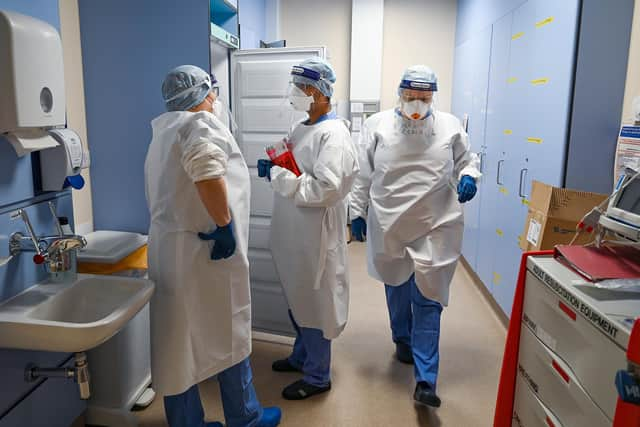
Weekly admissions to hospitals for the novel coronavirus fell from 162 in the week up to 23 August to 157 in the week ending 30 August.
And there was a significant fall in hospital in-patients being diagnosed with Covid-19, from 207 in the week up to 23 August to 155 for the latest week of data.
On 30 August there were 62 patients in high-dependency or intensive care beds with Covid-19, and 347 Covid-positive patients occupying beds in other parts of hospitals.
These were both increases from the snapshots taken seven days earlier, but GMCA described the picture in hospitals as “relatively stable”.
Almost seven in 10 adults have now had both their doses of a vaccine
On 30 August 69% of adults in Greater Manchester had received both their doses of a Covid-19 vaccine.
And 92% of over-70s were double jabbed.
Altogether, as of 30 August 1,922,873 first doses and 1,699,356 second doses had been administered in Greater Manchester.
GMCA is encouraging everyone who has yet to receive both doses to come forward when they are eligible to do so.