
Manchester MP leads fight against health inequality as city's premature death rates revealed among UK's highest
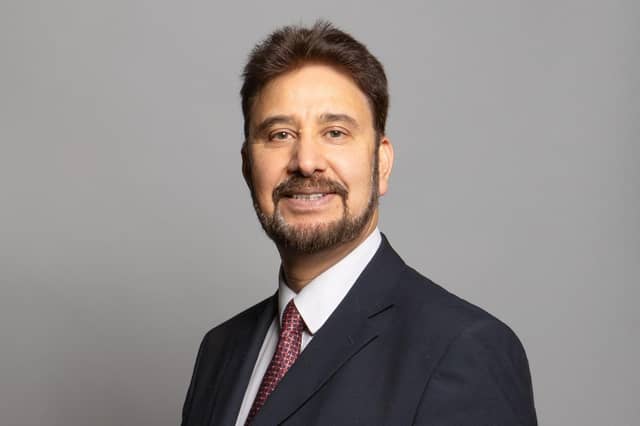

Manchester Rusholme MP Afzal Khan led a powerful parliamentary campaign yesterday demanding urgent government action on health inequalities, as shocking new data revealed Manchester residents are 99% more likely to die prematurely than people in other parts of the country.
The Labour MP hosted a coalition of more than 80 organisations and 77 MPs calling for a cross-government strategy to tackle health inequalities that are cutting lives short by up to 16 years across the UK.
Speaking at the Health Equals coalition event, Khan said: "It is deeply worrying that in Manchester, people are 99% more likely to die prematurely than in other parts of the country, largely because they do not have the same access to the building blocks of health. These things, like safe, affordable homes, secure jobs, healthy food to eat and clean air to breathe, keep us in good health for longer; this shouldn't be determined by our postcode. It's simply unfair that people in parts of Manchester Rusholme are expected to live 16 years less than other parts of the country."
Stark regional divide revealed
The event highlighted new data from The Health Foundation showing people in some areas of England and Wales are more than twice as likely to die before age 75 compared to other regions. Manchester's premature mortality rates were revealed to be among the highest in the UK, with the North East, North West and Yorkshire and the Humber having the highest rates of premature death, while London has the lowest.
The coalition, which includes Mind, the British Red Cross, Citizens Advice and Crisis, is calling for a cross-government strategy to tackle what it describes as the "building blocks of health" - quality housing, stable employment and clean air.
Public Health Minister Ashley Dalton, who attended the event, acknowledged the government's role in addressing the crisis. "Tackling persistent health inequalities is a key aim of our mission to make the NHS fit for the future," she said. "We are determined to ensure that where you live no longer determines how long you live."
Public concern grows
Polling commissioned by Health Equals revealed growing public alarm about the nation's health, with over half (53%) believing physical health in the UK is getting worse. Almost all adults (95%) reject the idea that individuals alone are responsible for staying healthy, with 72% saying government shares responsibility.
The event was hosted by Afzal Khan MP, whose Manchester Rusholme constituency sits in the bottom 25% for life expectancy at just 77 years.
Paul McDonald, Chief Campaigns Officer at Health Equals, described health inequality as "a national crisis hiding in plain sight".
"The data shows that people in some areas of England and Wales are twice as likely to die before 75 than people in other areas," he said. "This reflects deep-rooted inequality tied to where people live, work, and learn."
Government commitment tested
The campaign comes after the government committed in its 10-Year Health Plan to halve the gap in healthy life expectancy between the richest and poorest regions. However, campaigners argue this requires action far beyond the NHS, encompassing housing, education, employment and environmental policy.
Award-winning author Darren McGarvey, who joined the event, delivered a powerful message about the personal impact of health inequality. "I grew up in a working-class community in Glasgow where poverty, addiction, and early death were part of everyday life. I saw how where you live, what you earn, and the stress you carry, can shape your health," he said.
"These aren't just statistics, they're stories like mine, repeating across the UK. This isn't about party politics, it's about justice. We need stronger local responsibilities and MPs willing to lead with urgency."
For Khan, representing one of the most affected constituencies, the issue remains deeply personal. As a Health Equals Parliamentary champion, he is calling for urgent action that could transform the lives of his constituents who face some of the starkest health inequalities in the country.
*Health Equals aims to raise awareness of health inequalities and push for policy action. More information at: Health Equals | Make Health Equal*