
Manchester aid agency worker visits refugee camps in Lebanon.
“I heard a drone for the first time even though there’s a ceasefire …. It’s something you can’t see but has become synonymous with war. They’re irritatingly loud … it’s an invisible threat.”
In this country, when we look up and see a drone, we often wave.
In Lebanon – and other countries living through conflict – a drone is an ‘invisible enemy’ and the sound creates a tension few of us can imagine.
Paul Donohoe, who lives in Chorlton, works in the communications team at international development agency Christian Aid. Usually, the 46-year-old is coordinating national, regional and social media stories, sharing the work of the organisation in countries around the world. But recently he had the opportunity to travel to Lebanon where he saw firsthand the devastating impact of the recent war.
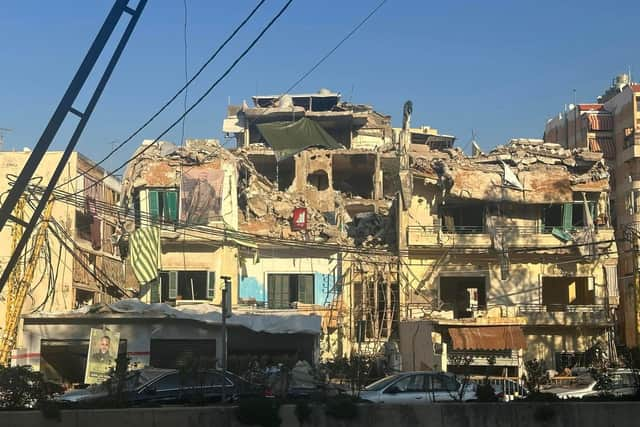

Israel first began hitting targets in southern Lebanon in October 2023, but the escalation in violence last September was on a different scale. In little more than two months, more than 3,000 people had been killed and more than 14,000 injured, until a temporary ceasefire was agreed at the end of November. At its height, the bombing campaign caused 1.3 million people to flee their homes - nearly a quarter of the entire population of Lebanon. While most were able to move in with relatives or rent another home, nearly 200,000 had no choice but to seek safety in cramped collective shelters.
Paul had previously lived in Lebanon for three-and-half years, working for an international aid agency responding to the Syrian refugee crisis, but on his first visit in more than five years he returned to find a country traumatised by the recent war and struggling with an ongoing economic crisis.
Here he explains what he found upon his return and how different life is under the threat of violence.
“Lebanon isn’t on the tourist trail but it’s a really interesting place to visit. I really enjoyed living in Beirut, and it was easy to make friends with my Lebanese colleagues because so many are fluent in English. Lebanese food is also some of the best in the world. Lebanese people are a lot of fun and are famous for ‘living in the moment’ because they’ve experienced so many difficult times.
As well as conflict, Lebanon has also faced an economic crisis, making day-to-day life very difficult for the vast majority of people. It is now much harder to pay for things because of the fluctuations in the exchange rate. Where you used to get 1,500 Lebanese pounds to the US Dollar, now it’s closer to 100,000. I bought a bag of coffee from a favourite cafe and was shocked that what used to cost just a few pounds, now cost me $10.
There is a lot of visible poverty. I saw children digging through bins looking for things to recycle and sell. I also saw children begging on the streets or selling tissues from the side of busy highways. It’s very uncomfortable to watch because you know they’d rather be in school and are only doing this because their family has no other choice.
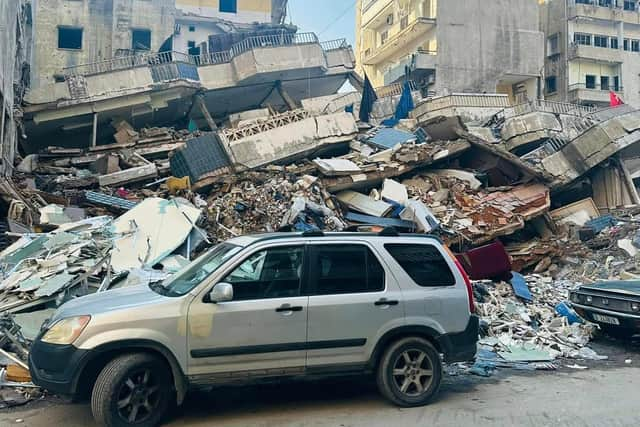
At the end of last year, Lebanon came under bombardment for 66 days as the Israeli military struck targets it said were linked to the Lebanese Shia armed group Hezbollah. It was an intense barrage and it’s clear people have been badly impacted by what they experienced during those two months.
You can see the devastating effect of the bombing on neighbourhoods, across south Beirut. People fled in huge numbers and hundreds of buildings were destroyed – there was real fear about what was to come.
When I visited, it really hit home that everyone had been hugely affected by the war. Those involved in the humanitarian response were exhausted and struggling to come to terms with what they had seen and gone through.
I heard a drone for the first time while in Beirut, and even though there’s a ceasefire in place it was very disturbing. It’s something you can’t see but has become synonymous with war. They’re irritatingly loud but you can’t judge the size of them as you can’t see them – it’s an invisible threat and it has an ongoing psychological impact even during a ceasefire.
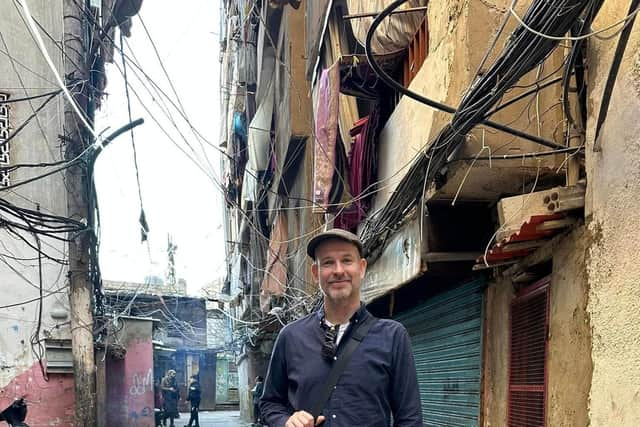
Christian Aid has a history with Lebanon going back to the 1950s, and we have long-standing relationships with many organisations there. I visited Palestinian refugee camps like Shatila and saw the work going on there.
Christian Aid’s local partners in Lebanon worked round the clock to support those impacted by the war, providing emergency supplies, such as mattresses and medical devices as well as running a drop-in centre to give people who had fled their homes somewhere to shower, clean their clothes and cook for their families.
It’s inspiring to meet rescue workers who did all they could to help others even though their own families were in danger. It’s a great honour to work with organisations involved in helping people during acute moments of crisis and who are on the frontline supporting communities.
Many people also talked a lot about the situation in Gaza and how they found it incomprehensible that people there had faced more than a year of airstrikes.
When you see how some people’s lives are about dealing with tragedy every day it makes me realise how lucky I am.
It’s these kind of things which make me proud to work for an organisation like Christian Aid. I look on it as a privilege to work in a role which helps open people’s eyes to the reality of others’ lives around the world.”
To find out more about the work of Christian Aid please visit www.christianaid.org.uk