
Hyde-based greeting card designer asks people in Cheshire & Greater Manchester to help protect the postal service
Hyde-based greeting card co-founders Kathy Harrington and Erin James today joined the chorus of small business owners asking for MPs to investigate proposed changes to Royal Mail’s service obligations by signing a petition from the UK’s Greeting Card Association
What began as a friendship formed over fresher’s fair antics at Manchester University, countless packets of instant noodles, and a shared love of design soon blossomed into Stop The Clock Design.
After graduating with degrees in textiles, Kathy and Erin turned their creative passion into a business, starting out in a shed and selling hand-printed artwork and greeting cards at local fairs. The response they received made them realise they had something special.
In 2008, Stop the Clock Design was born—an outlet for their playful creativity (with dogs in hats being a firm favourite) and a brand that brings laughter, colour, and a touch of quirkiness that customers love.
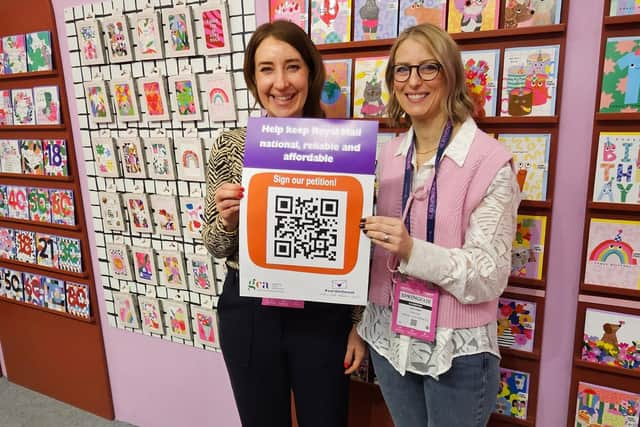

Kathy and Erin rely on Royal Mail and is asking people across Greater Manchester to sign the petition and protect the second-class post because they think what’s proposed is a devastating move for small businesses.
Last month Royal Mail and regulator Ofcom proposed changes to Royal Mail’s legal obligations (the USO) that will end Saturday second class delivery and cut back delivery days to a minimum of two per week.
Even though last month Ofcom confirmed[1] it had begun a consultation on the changes that wouldn’t end until April, it gave the green light to Royal Mail’s premature trials to end Saturday second class delivery in over 30 locations this month.
These pilots reduce the service for over a million households, and Ofcom and has made clear permanent nationwide changes can be made without any involvement from MPs[2].
Kathy and Erin said:
“As business owners, we understand that tough decisions sometimes have to be made, but the rising cost of First-Class postage is putting real pressure on what we can offer. When we started, it was just 36p—now it’s £1.65, an increase of nearly 360%. Small businesses like ours feel overlooked in these decisions.”
“We take pride in delivering a First-Class service to our customers, but with these soaring costs, we’ve had no choice but to switch to Second Class postage. With delays and disruptions, particularly during peak times, this risks impacting customer experience, leading to more refunds and, ultimately, fewer sales as customers lack confidence in the product arriving on time. It’s a frustrating challenge that could have long-term effects on small businesses like ours.”
In October last year, Royal Mail raised the price of a first-class stamp from £1.35 to £1.65 – an inflation-busting 22 per cent increase that was the fifth hike in less than three years.
A first-class stamp is now almost twice the price of a second class stamp, which only remains affordable at 85p because it has the protection of being pegged to inflation by regulator Ofcom.
And the UK’s Greeting Card Association, which represents over 500 publishers, retailers, agents, specialist suppliers and distributors in an industry worth over £1.5bn to the UK economy, said it feared the rise could result in killing off affordable letters post for good, adding further strain on pressured high streets.
Sending a physical card is a simple, joyful and inexpensive way to create a tangible connection between people that builds and nurtures relationships. An average card costs £1.89 and it’s still only 85p, thanks to the second-class stamp, to send it anywhere in the country.
However Royal Mail continues to fall short of the delivery service standards set for it by Ofcom. In December it fined Royal Mail £10.5m[3] after failing to meet delivery standards during the 2023/4 financial year[4]. confirming that consumers were increasingly switching away from First to Second post, with cost being the main driver.
From April 2023 to March 2024, Royal Mail only delivered 74.7 per cent of First Class mail on time and 92.7 per cent of Second Class mail on time.
“The changes we are assessing could be made through Ofcom’s regulations, and would not require Parliament to make any changes to legislation.”[3] https://www.ofcom.org.uk/post/royal-mail/ofcom-fines-royal-mail-10.5m-for-poor-delivery-performance [4] https://www.ofcom.org.uk/siteassets/resources/documents/postal-services/monitoring-reports/2023-2024/post-monitoring-report-2023-24.pdf?v=384016