


Event organiser Celia Gaze, founder of The Wellbeing Farm, organised every aspect of the festival-style event which tackled serious topics in a fun way.
Celia and Andrew Leeming from Boost Lancashire opened the day, which ran to the theme of ‘Be more womble’ - a nod to the greatest TV recyclers, who made an appearance, along with the farm’s star llama attractions.
Then Andy McNae, MP for Darwen and Rossendale was one of the first speakers saying: “I fundamentally believe business can be a power for good. B-Corps' objectives are to create a positive impact, fairness and promote a sustainable economy.”
He outlined: “As the Government kicks off its Industrial Strategy and Infrastructure plan, Mr McNae said: “People will be asking what does this mean for Darwen and Rossendale. In Rossendale, there are hardly any businesses with 250 employees. It is a place of small businesses, and if they don’t feel the benefit in terms of the Industrial Strategy, it’s pointless. You must give them the conditions to grow and thrive.”
B-Corp certification is a credential awarded by B-Lab UK, and there is a formal process to achieve the certification, with new standards introduced in April.
The organisation, which was formed in 2015, comprises a growing community of businesses who put good deeds above profit. The members uphold the highest standards of social and environmental performance. Every B-Corp signs a declaration of interdependence – a mission statement for all B-Corps when they certify and the community is held together with a shared vision of and a legal commitment to meet high standards of social and environmental performance and to create benefit for all stakeholders.
Currently, the B Corp movement is one of the fastest growing of its kind with 2,500 members. It is projected to reach 3,000 by the end of the year, making it the fastest-growing community of certified businesses in the UK. Worth £31.6 billion total revenue, the B movement in the UK has 182,000 employees.
Great British Sewing Bee’s Patrick Grant shared how he founded Community Clothing, a company putting pure intentions over profit.
He is an outspoken TV Judge, former Savile Row tailor, designer at Debenhams and now founder of a sustainable and affordable clothing firm called Community Clothing, who provide ethical and quality garments that last.
Garments are spun, woven, dyed, knitted and sewn in factories across England, Scotland and Wales. Indeed, Patrick saved Blackburn-based Cookson & Clegg from collapse in 2016. He spoke on the day about the benefits of using business as a power for good.
“At the end of the first industrial revolution, over 80 per cent of businesses in Lancashire were owned by people who lived here. Surplus profit flowed around in the local economy, creating more opportunity,” he began.
“When I was born in 1972, we bought clothes in shops that were made in factories in this country. Half of the things we use every day were made in Britain, by companies that employed local people. Marks and Spencer (M&S) sold 20 per cent of all the clothes we purchased; they cared and had deep relationships with people.
“For almost all of the history of commerce, we bought things from the people who made them, That relationship was direct, with positive benefits. The money you spent went to the person you bought off. There was nobody else sifting off a bit of extra cream for themselves.
“Now, very little of the money we spend goes to the people who make it.
“We’ve sleepwalked into a situation where our money isn't doing any good anymore.
“Would you rather give your money to Jeff Bezos and see him use it to send a bunch of morons into space - not even real space mind, just quite high up - or would you like to see your money flow into local business? I know I’d rather it go to another bloke called Jeff, who lives down the road and makes stuff for a living with his hands?
“Typically, between 10 and 25 per cent of the money you spend goes to those who made the goods and the rest of it is put into other people's pockets.
“Quality, is in extraordinary decline. The incentive is not to make a good thing, but to encourage people to buy as much as they possibly can. That is businesses raison d'être: to get bigger, to sell more and create more profits.
“We can’t stop the big brands flogging us even more stuff. As they launch 2,000 new lines a week, consumers cannot possibly keep up with the mountains of newness.
“It is a deliberate ploy to keep you locked into this cycle of buying. All it is doing is making you anxious and depressed.”
Patrick was still working for Debenhams when he set up Community Clothing nine years ago. When Debenham’s went bust he lost most of his money and his income, but was still able to keep Community Clothing going with private equity. Last year, bought it back, and just two weeks ago they held a crowdfunder and the customers all raised the money in 48 hours – something he says is testament to providing products that do good things for the world:
He said: “I wanted us to be different from the H&M's, Zara’s and Primark's of the world, whose business model is to sell you more stuff this week than they sold you last week.
“I wanted to give people a choice – products that felt good, lasted, fitted nicely and weren’t made out of stuff that was killing the planet or would spend a million years in landfill when we get rid of it.
“We had a challenge to make good clothes in Britain, create decent jobs, and sell them at an affordable price.We had to get rid of all the noses in the trough. In our model, 65 per cent of every pound spent goes on manufacturing the goods.
“I'm pleased to say Community Clothing measures its success by the amount of work we create and we tracked 450,000 hours of work in the UK last year.
“We sell stuff made locally, good products that last in somebody's wardrobe for 10 years. Then, it's sold second-hand, ensuring another 10 years in somebody else’s wardrobe, and so on. Our products have lasting value, and everybody in the chain benefits. No one is going to put them in three weeks later and replace them with something else.”
Community Clothing spends 11 per cent of its turnover on sales and marketing activity and instead relies on word of mouth and a website. Two weeks ago it held a crowdfunder to raise money to keep going, and people backed it.
“Customers in the UK are starting to wake up to the idea that their money has great power. Every single person can choose where they spend their money.
“Our customers like the fact that they're putting money into the local economy. They feel a connection that makes them feel good.
To illustrate, Patrick added: “I'm wearing head to toe, trainers from Bolton, socks from West Sussex, trousers and a T-shirt from Blackburn.
“Our website shows all the local suppliers we work with. It’s an interconnected web of local economic benefits. It is powerful for people to know what their money is going to do. With our products, you can trace where it's made down to the town and even some of the factories.
“Have a few things that make you feel good and be content that the money is going to somebody nice.”
He reiterated: “There are four P's of marketing, and product is the one most clothing companies have given up on.
“In the current mode of consumption, we buy loads of stuff that we don’t need. We are filling our wardrobes with junk.
“The big chains make mountains of stuff no one wants. There are 2,000 lines released every week.
“We’re just conned into buying stuff that promises a better life, but the way that we feel happy is by living with things that have meaning to us.
“We at Community Clothing have returned to a model where quality and selling at an honest price is a good enough business model.”
Isabel McLennan, Engagement Manager at B-Lab UK, explained how they have just launched new standards in April, overhauling the certification system.
“We aim to ensure certification remains as rigorous and aspirational as possible,” said Isabel. “There is a need to develop a guide for businesses to help them be a force for good and create a credible community.
“All the new standards have been developed in collaboration, gathering feedback from over 3,000 people who have applied for B-Corp Certification. This has been developed over several years in collaboration.
“Why are we doing this change now? Business is a driver of the issues we see today, so we think now is the time.
“With the changing external landscape and behaviour of consumers, we needed to change and raise the bar, updating ourselves so we are more rigorous.
“The minimum certification used to be 80 points, and companies could choose how they wanted to apply. With the new standards, we are moving towards a set of minimum requirements which require action.
All existing B-Corps will need to recertify this year and next. To ease the process, B-Lab has launched a free self-assessment for B Corp members. More information is available online.
Not long before the event, The Wellbeing Farm achieved a B Corp recertification score of 108.6!
Celia said: “I’m thrilled we have achieved such a high score. We are officially one of the highest-scoring hospitality B Corps in the world and it shows just how tough B Corp certification is.
“While the new B Corp standards have just been published (and are even more rigorous), the old scheme was still extremely tough, especially for hospitality so we’re incredibly proud to have achieved this score through genuine action, relentless improvement, and a lot of conscious celebration.
“At The Wellbeing Farm, we’re not just about throwing epic parties (though we do that brilliantly.
“We’re about celebrating consciously - creating events that tread lightly, give back, and uplift communities. A huge thanks to: our incredible team, suppliers, guests, and community — you made this happen.”
At the event, others shared their B-Corp journey. This included Silent Night’s Angela Moran, the beds and mattresses manufacturer located in Barnoldswick, Lancashire, who has just begun their B-Corp journey.
She said: “Two years ago, we chose a partner to help us in our journey and they recommended a spreadsheet of 132 actions. It took us three months to work through them. In November last year, we applied and are now starting the evaluation process. We hope to be within that 2,500 to 3,000 number you mentioned in the UK.”
Later, a panel consisting of the Keeper of the Flame at Atkinson’s Coffee Roasters, Ian Steel, ESG Director of Silent Night, Angela Moran and Sophie Lee of Electric Peach, who later did a storytelling session about turning your cause into a movement, took place.
The afternoon was divided into sessions, including practical workshops for businesses applying for B Corp accreditation by B Lab UK.
Meanwhile, Richard Dickson, Co-founder of Play It Green and Dr Zoe Detko, Founder of Ardrea Eco-innovation, a low carbon specialist, hosted a workshop to help businesses understand how Sustainability is Good for Business, not just for the planet.
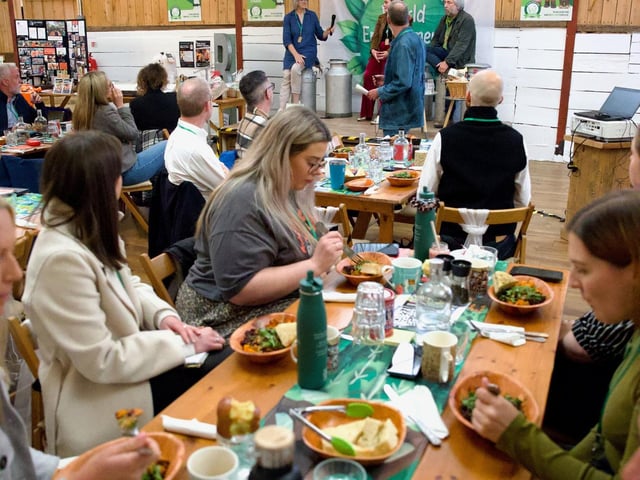
Overall, the day sparked dozens of sustainability conversations and debates between organisations.
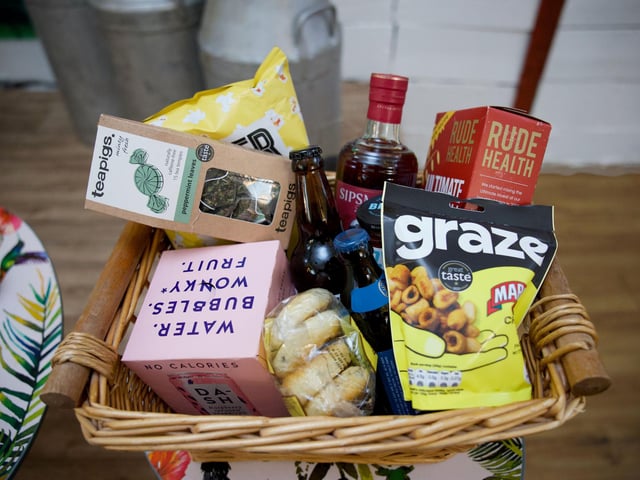
Everyone who attended received a goodie bag of sustainable goods, including handmade wooden candle holders (hand-turned by Celia’s 90-year-old dad). Celia is the chair of One Woman at a Time, a charity founded by Jean Anderson which helps empower women to say no to FGM and a raffle was held on the day to help raise money for the cause.
The afternoon included various sessions and workshops that businesses could rotate around. After the raffle was drawn and after cocktails the event drew to a close. It was a huge success and attendees found it insightful.
Celia’s mentor, Victor Giannandrea, Entrepreneur in Residence at Lancaster University and Honorary Teaching Fellow, was also in attendance.
James Grimshaw from Sustainable Energy First, a certified B Corp, said: “We’ve been involved with the B Corp movement for over three years now. It’s the second year at this event. It is always good to meet with the wider community, hear from businesses and share those experiences with our colleagues. It has been a great day.”
Another attendee, called Robert, said: “We are a business based in Blackburn and we are about to hit the button on our B Corp application. It was perfect timing. I postponed my holiday so I could come to this. I have found it so helpful.”
Speaking after the event Celia, who did plenty of research for the event, attending Anthropy at The Eden Project and ChangeNow in Paris, said: “I’m still buzzing from B Corp Fest. It was such a feel-good, purpose packed day full of inspiring speakers, community spirit and loads of laughs – especially when the llamas met the wombles.
“I’m so grateful to everyone who came, supported, donated and got stuck in. It really showed what can happen when people and businesses come together to make a difference.
“I’ve come away with about 30 new ideas. I’m already planning how to make B Corp Fest 2026 even bigger and bolder.”
Evidence of good is all around the farm, the community food bank to the new book ‘library’ at the bottom of the drive near the entrance on Plantation Road.
Celia, who launched a national Conscious Day on 13 March, is now branching out into other conscious events. They celebrated life in April, and wedding enquiries. The Wellbeing Farm is one of the leading venues in Lancashire for weddings.
Their resident llamas add fun to weddings and occasions, making the day memorable. After all, the llamas in their bow ties are what put the farm on the map.
The next big event on the calendar is WEDFEST: PRIDE in your Wedding Festival on July 29. The upcoming events can be found here
5. Contributed
It was a great event and sparked lots of debates Photo: Submitted
6. Contributed
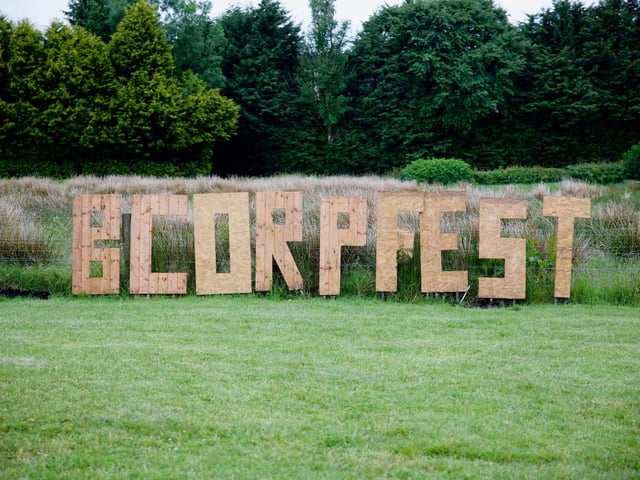
B Corp Fest Photo: Submitted
7. Contributed
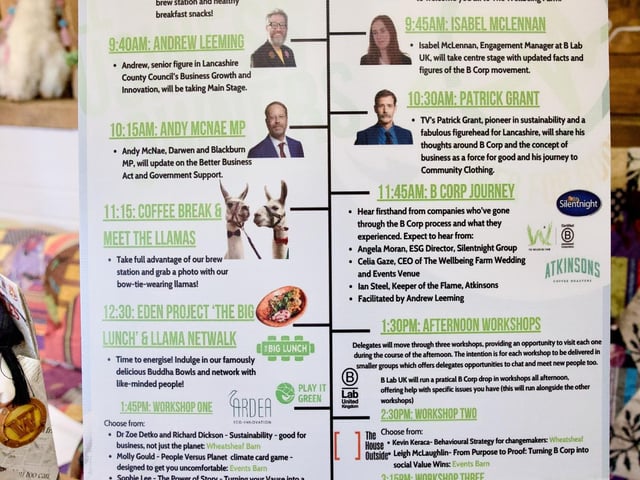
This was the agenda Photo: Submitted
8. Contributed
There were hampers on the day Photo: Submitted